Selling a home in Rochester starts with a clear plan for your property, your timing, and your next move. Use this overview to prepare for a conversation with Updegraff Group Realty, then download

Dated: August 15 2024
Views: 274
Many have recently struggled with buying a home due to affordability challenges. However, there are promising signs that the situation is improving, and conditions might continue to get better throughout the year. Lawrence Yun, Chief Economist at the National Association of Realtors (NAR), notes:
“Housing affordability is improving ever so modestly, but it is moving in the right direction.”
Let’s break down the latest data on the three major factors affecting home affordability: mortgage rates, home prices, and wages.
Mortgage rates have seen significant fluctuations this year, ranging from the mid-6% to low 7% range. Fortunately, recent data from Freddie Mac indicates a downward trend in mortgage rates since May (see graph below).
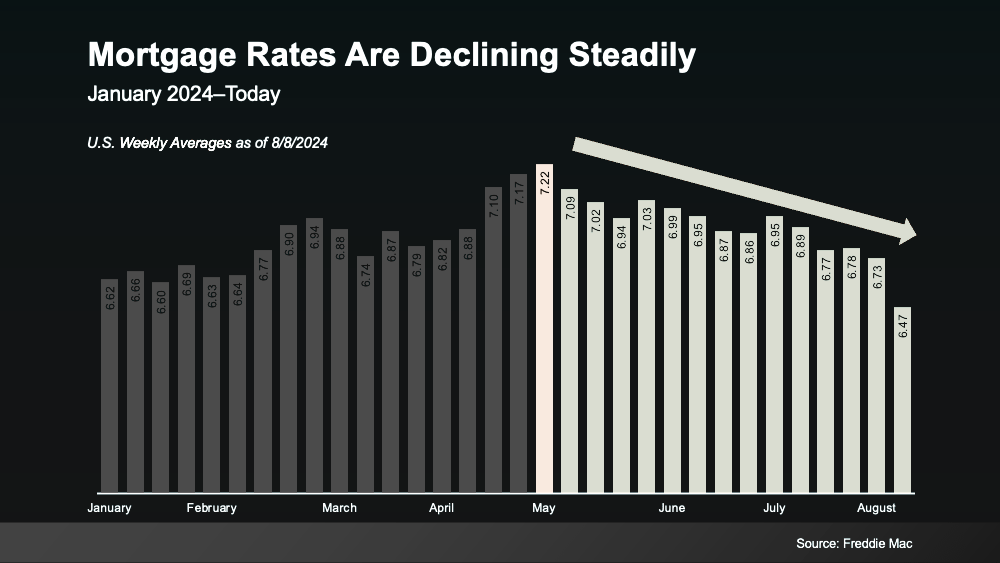
Why this matters: Recent economic, employment, and inflation data have contributed to this decrease. While some volatility is expected, if future economic indicators continue to show a cooling trend, mortgage rates might keep falling. Even a modest decrease can make homeownership more affordable by lowering your monthly payments. However, don’t expect rates to drop back to the 3% range we saw in the past.
Home prices continue to rise nationally, but the pace has slowed compared to previous years. Data from Case-Shiller shows a more gradual increase in prices (see graph below).
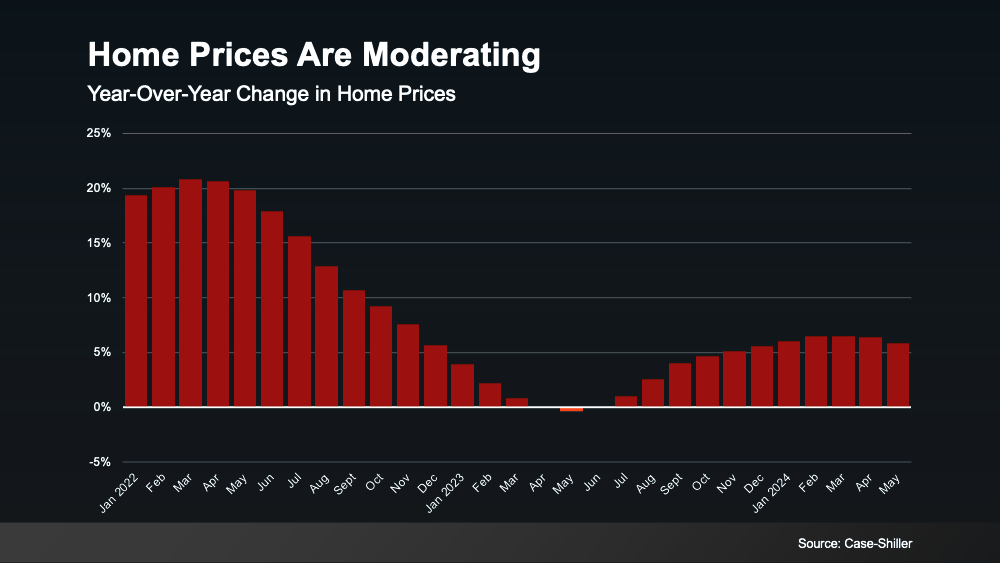
Why this matters: Slower price growth is good news for potential buyers. After significant increases during the pandemic, rising prices made homeownership more challenging for many. With the current slower growth rate, buying a home may seem more attainable. As Odeta Kushi, Deputy Chief Economist at First American, states:
“While housing affordability is low for potential first-time home buyers, slowing price appreciation and lower mortgage rates could help – so the dream of homeownership isn’t boarded up just yet.”
Rising wages are another positive factor for home affordability. Data from the Bureau of Labor Statistics (BLS) shows that wages have been increasing at a faster rate recently (see graph below).
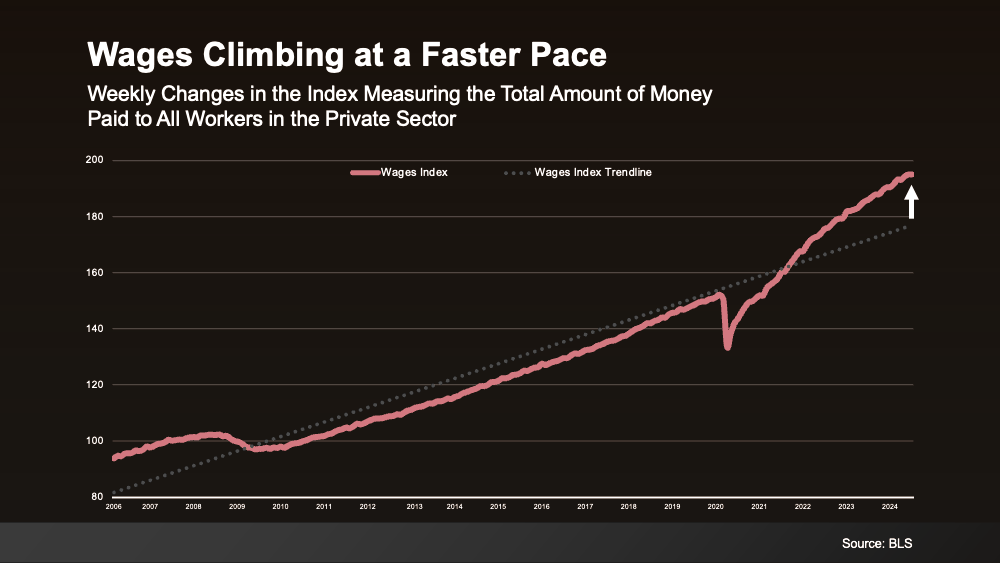
Why this matters: Higher wages mean you’ll spend a smaller portion of your income on your mortgage, making homeownership more feasible.
When you combine these factors – decreasing mortgage rates, slower home price growth, and rising wages – there are early signs of improvement in home affordability. While challenges remain, these trends suggest that the situation might be starting to get better.
For more insights and updates on real estate trends, stay tuned to our blog!

About Mark C. UpdegraffWelcome — I’m Mark C. Updegraff, Broker of Record and founder of Updegraff Group Realty.My path into real estate has been anything but ordinary, and that has become ....
Selling a home in Rochester starts with a clear plan for your property, your timing, and your next move. Use this overview to prepare for a conversation with Updegraff Group Realty, then download
Updated September 12, 2026. This guide revisits the topic of our June 2023 article for people considering their first Rochester investment property.Starting young gives you time to learn, but age
When you're planning to buy a house, your credit score plays a crucial role in determining your eligibility for a mortgage and the interest rate you'll receive. Did you know that the minimum credit
If you're thinking about buying or selling a home, mortgage rates are probably on your mind. That's because these rates play a big role in determining how much your monthly mortgage payment will be,
 The Greater Syracuse Association of REALTORS ®: The data relating to real estate on this web site comes in part from the Internet Data Exchange (IDX) Program of the CNYIS, powered by CNYIS. Real estate listings held by firms other than Updegraff Group LLC, are marked with the IDX logo and detailed information about them includes the Listing Broker's Firm Name. All information deemed reliable but not guaranteed and should be independently verified. All properties are subject to prior sale, change
or withdrawal. Neither the listing broker(s) nor this site's owner shall be responsible for any typographical errors, misinformation, misprints, and shall be held totally harmless.
© Central New York Information Service, Inc. All rights reserved.
Show More...
The Greater Syracuse Association of REALTORS ®: The data relating to real estate on this web site comes in part from the Internet Data Exchange (IDX) Program of the CNYIS, powered by CNYIS. Real estate listings held by firms other than Updegraff Group LLC, are marked with the IDX logo and detailed information about them includes the Listing Broker's Firm Name. All information deemed reliable but not guaranteed and should be independently verified. All properties are subject to prior sale, change
or withdrawal. Neither the listing broker(s) nor this site's owner shall be responsible for any typographical errors, misinformation, misprints, and shall be held totally harmless.
© Central New York Information Service, Inc. All rights reserved.
Show More...
 The data relating to real estate on this web site comes in part from the Internet Data Exchange (IDX) Program of NYSAMLS. Real estate listings held by firms other than Updegraff Group LLC, are marked with the IDX logo and detailed information about them includes the Listing Brokers Firm Name.
Disclaimer: All information deemed reliable but not guaranteed and should be independently verified. All properties are subject to prior sale, change or withdrawal. Neither the listing broker(s) nor Updegraff
Group LLC shall be responsible for any typographical errors, misinformation, misprints, and shall be held totally harmless. © 2026 CNYIS, GENRIS, WNYREIS. All rights reserved.
Show More...
The data relating to real estate on this web site comes in part from the Internet Data Exchange (IDX) Program of NYSAMLS. Real estate listings held by firms other than Updegraff Group LLC, are marked with the IDX logo and detailed information about them includes the Listing Brokers Firm Name.
Disclaimer: All information deemed reliable but not guaranteed and should be independently verified. All properties are subject to prior sale, change or withdrawal. Neither the listing broker(s) nor Updegraff
Group LLC shall be responsible for any typographical errors, misinformation, misprints, and shall be held totally harmless. © 2026 CNYIS, GENRIS, WNYREIS. All rights reserved.
Show More...
